How SEA Enterprises Cut Multi-Cloud Costs by 40% in 2026
How SEA Enterprises Cut Multi-Cloud Costs by 40% in 2026 Three out of four SEA enterprises we work with are overpaying for multi-cloud infrastructure by at least 40%. Not because they chose the wrong....

How SEA Enterprises Cut Multi-Cloud Costs by 40% in 2026
Three out of four SEA enterprises we work with are overpaying for multi-cloud infrastructure by at least 40%. Not because they chose the wrong vendors — because the operational layer underneath was never built to govern the complexity that multi-cloud adds. The number shows up in the quarterly bill and the post-mortem after a migration that went sideways. It does not have to be that way.
The data comes from our own practice: over 30 enterprise migration assessments across Indonesia, Singapore, and the Philippines in the past 18 months. The cost gap is consistent, the root causes are identifiable, and the fixes are executable without renegotiating vendor contracts.
Photo by Rajukhan Pathan on Pexels
What the Cost Overrun Numbers Actually Mean
The 40% overrun is not a rounded estimate — it is a cluster of specific line items that compound. Cross-region data transfer between AWS and OCI, for example, runs roughly $0.09 per GB over public internet versus $0.02 for in-vendor cross-region movement. On a 20 TB monthly transfer budget, that difference is $1,400 in avoidable spend before the first storage tier reclassification.
Egress charges are the most visible culprit. AWS S3 and Google Cloud Storage charge approximately $0.09 per GB outbound to internet. Alibaba Cloud OSS charges materially less for traffic staying within Asia — and this matters for Jakarta-based workloads running users across Surabaya and Bandung. Teams that did not model egress before migration consistently report it as their largest surprise bill 60 days post-go-live.
API call volume and retrieval class mismatches are the second cluster. Storage tier optimization is operational work, not a one-time architecture decision. The question is not which cloud storage service to pick — it is whether the team has the FinOps discipline to move cold data into cold tiers and automate lifecycle policies across multiple business units. Agilewing's MSP team operates this layer for SEA enterprises running AWS-anchored estates, and clients typically recover 17–34% of their annual storage spend in the first quarterly review cycle.
The Multi-Vendor Assessment Is Not Optional
Evaluating cloud infrastructure across AWS, GCP, and Azure before committing is the step most teams skip because it feels slow. The vendor comparison has to cover more than per-hour compute pricing. It has to cover egress geometry, regional service availability, partner ecosystem depth, and the compliance frameworks relevant to your industry.
For Indonesian enterprises, the compliance surface is specific. PDPA in Indonesia, GDPR if you serve EU customers, PCI-DSS if you handle payment card data, and MLPS 2.0 if any China-facing workloads are in scope. Agilewing covers cross-border compliance consulting across all of these — the same team handles the GDPR overlay and the Indonesia data sovereignty question in the same engagement.
The APN Security partnership matters here. It is not a marketing qualifier — it is the operational qualification that lets a partner manage the security governance layer across multi-cloud estates without triggering audit findings. Security in the cloud is not a checklist; it is a continuously-tended architecture. The teams that run it well treat it as a service, not a configuration.

Photo by panumas nikhomkhai on Pexels
AWS Jakarta in 2026: What Actually Works
AWS ap-southeast-3 (Jakarta) has matured significantly. The region launched GA in December 2021, and the service catalog has expanded to cover most production-grade workloads without requiring Singapore fallback. Latency from Jakarta to ap-southeast-3 runs 8–22ms for local workloads — competitive with what teams previously routed through Singapore.
The regional service availability gap is narrower than it was two years ago, but it still exists. Some services go GA in us-east-1 and take 4–6 months to reach ap-southeast-3. For teams building CI and CD pipeline automation, this means pinning your deployment tooling to services confirmed available in your target region, not the global catalog.
AWS web services security features — VCN isolation, security groups, WAF, DDoS protection via Shield — are all available in ap-southeast-3. For enterprise architectures, these stack into a security posture that meets GDPR compliance requirements and Indonesian PDPA obligations without requiring third-party appliance overlays.

Photo by panumas nikhomkhai on Pexels
The Five-Phase Migration Framework That Holds
Agilewing runs a five-phase migration process: assessment, architecture design, PoC trial migration, formal migration, and post-launch MSP optimization. Each phase has a gate — it does not proceed until the previous phase is signed off by the client's technical lead.
Pre-migration assessment covers application dependencies, performance requirements, security and compliance audit, TCO estimate, and downtime strategy. This is where the cost overrun patterns get identified before they become post-migration surprises. The assessment output is a complete migration proposal with risk ratings on every workload.
Active-active parallel running and blue/green deployment are the standard mechanisms for minimizing downtime. Real-time database replication means most migration projects achieve RTO under 30 minutes and RPO approximating zero. For mission-critical workloads, the zero-downtime switch is executable.

Photo by Ron Lach on Pexels
Post-Migration Is Where the Real Work Starts
The migration event itself is the easy part. The operational layer that runs after is where enterprise teams either recover the 40% or widen the gap.
7×24 monitoring with a TAM and architect team is the baseline. Response time for critical issues is under 15 minutes. For general guidance, the SLA is under 24 hours; for production-impared incidents, under 4 hours.
FinOps practice runs continuously: cost-attribution tagging, lifecycle-policy automation, and cross-cloud governance across the full estate. The storage tier reclassification alone — moving cold data to cold tiers and eliminating hot-tier sprawl — accounts for the majority of the 17–34% annual recovery we see in the first year.
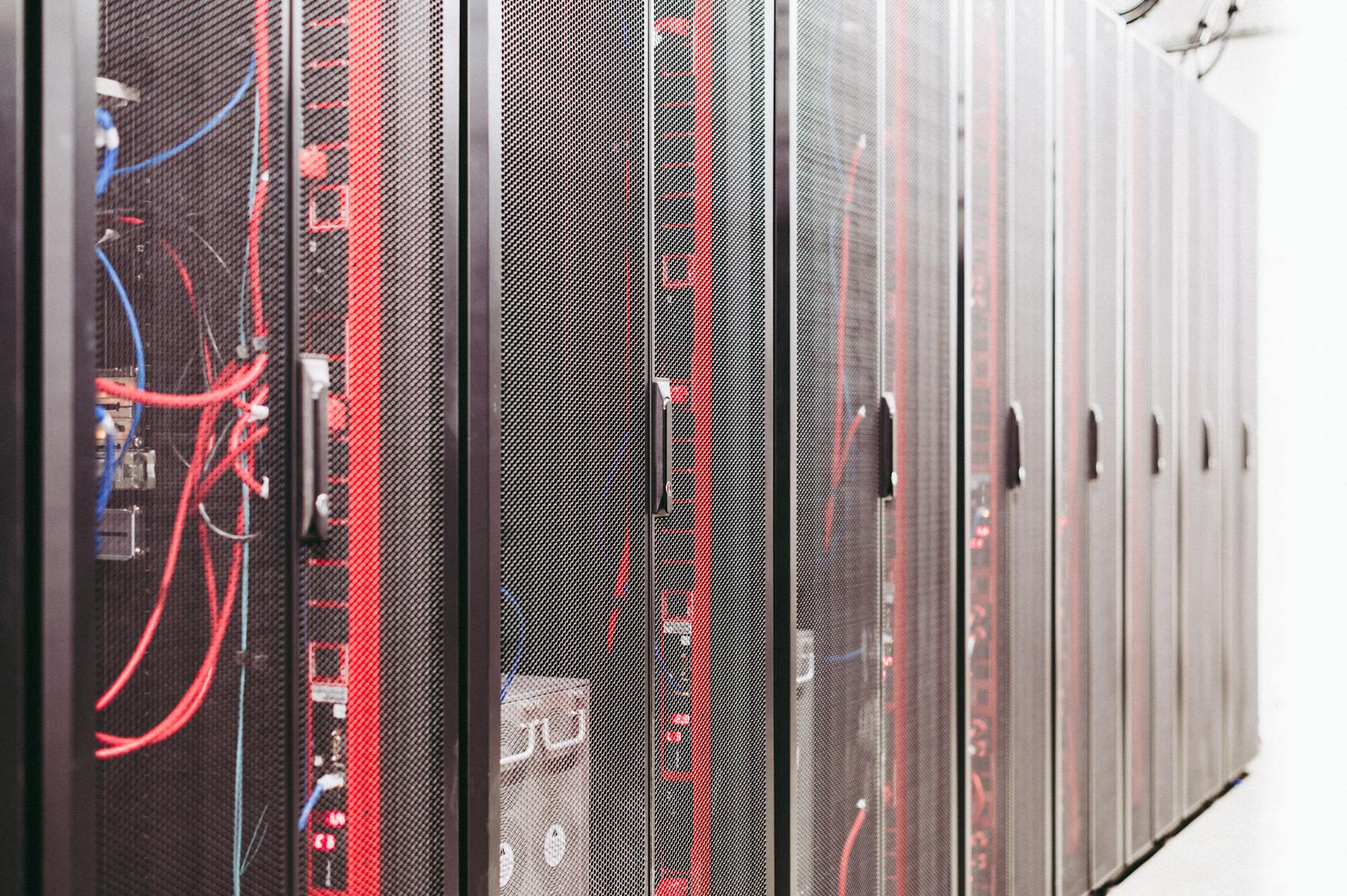
Photo by Brett Sayles on Pexels
FAQ
What cloud-vendor partnerships and certifications does Agilewing hold?
Agilewing is the first partner to obtain APN Security qualification, with deep partnerships across Alibaba Cloud, Oracle Cloud Infrastructure, AWS, and Microsoft Azure.
Do you support multi-cloud architecture integration?
Yes. Agilewing designs hybrid and multi-cloud architectures, selecting the best-fit combination per workload based on performance, cost, compliance, and regional requirements.
How is data security guaranteed during migration?
Encrypted-in-transit transfers, least-privilege access, audit logging, and pre- and post-migration integrity checks. The process is validated at each phase gate before sign-off.
What does post-migration MSP include?
7×24 monitoring, TAM and architect team, periodic tuning, cost-optimization advice, and security governance reviews — the full operational layer for the migrated estate.
Which compliance standards do your services align with?
GDPR, PCI-DSS, PDPA (Singapore, India, Indonesia), CCPA, MLPS 2.0, OWASP Top 10, DLP, and BYOK data protection — across cross-border deployments.
How quickly can incidents be resolved after migration?
Critical business system downtime triggers a 15-minute response SLA. Production-impared incidents are under 4 hours; general guidance is under 24 hours.
Thank you for reading this piece from our digital heirloom collection.
Agilewing · The Digital Heirloom · Volume I